$5 Indian Gold Half Eagle
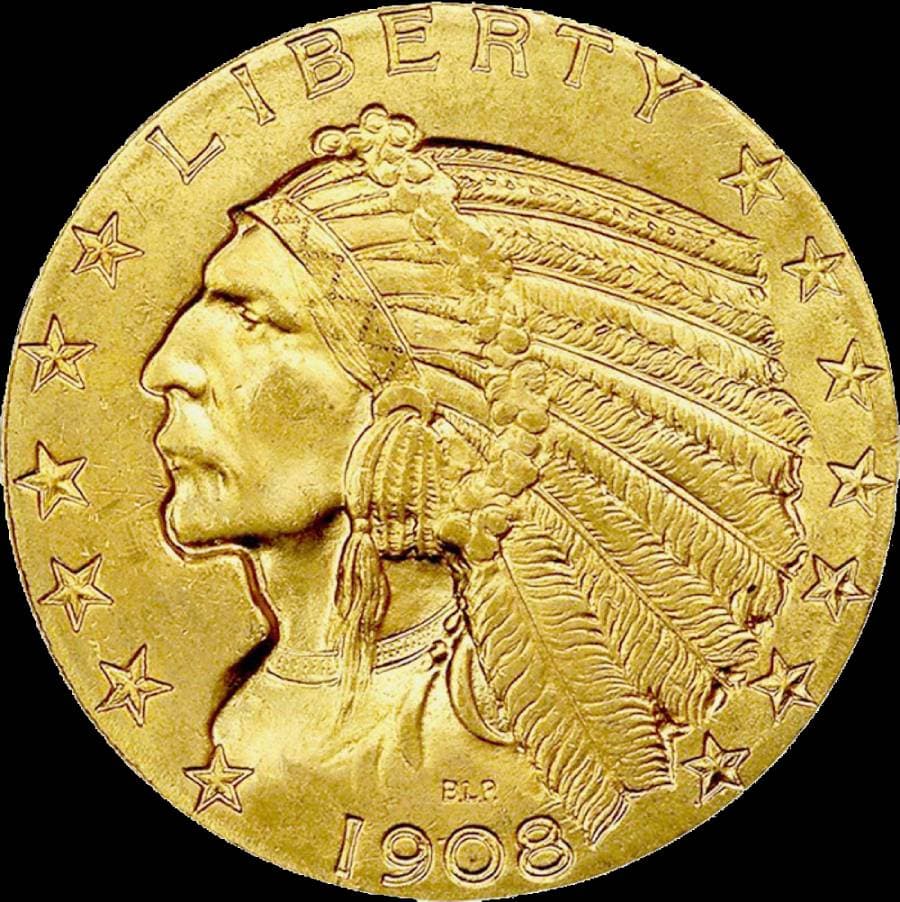
Images are for educational/reference use and may not represent current inventory.
Gold Silver Crypto sells Indian Head $5 Half Eagles, with live spot-based pricing and secure checkout. Pricing depends on live gold value, date, mintmark, authenticity, condition, certification, and current numismatic demand.
Related Products
Indian Head Half Eagle Specifications
| Metal | Gold |
| Purity | 90% gold / .900 fine |
| Actual gold content | Approximately 0.24187 troy oz |
| Total weight | Approximately 8.359 g |
| Diameter | Approximately 21.6 mm |
| Face value | $5 legal tender |
| Designer | Bela Lyon Pratt |
| Issue years | 1908–1916 and 1929 |
| Mints | Philadelphia, Denver, New Orleans, and San Francisco |
| Design style | Incuse (recessed) principal design |
| Edge | Reeded |
“Half Eagle” refers to the $5 denomination — it does not mean one-half troy ounce of gold. The coin contains approximately 0.24187 troy ounce of actual pure gold, and total weight is higher than pure gold content because the coin is a 90% gold alloy. The $5 face value is not the coin's modern market value. Date, mintmark, condition, authenticity, grade, and certification may all add numismatic value, and production was interrupted after 1916, resuming only for the final 1929 issue. Learn about the incuse design.
About the Indian Head Half Eagle
President Theodore Roosevelt pushed to improve the artistic quality of U.S. coinage in the early 1900s, and commissioned sculptor Augustus Saint-Gaudens to redesign the nation's coins. Saint-Gaudens died in 1907 before completing the smaller gold denominations, and the Mint turned to Boston sculptor Bela Lyon Pratt, who introduced an unusual recessed, or incuse, design for the $5 Half Eagle and $2.50 Quarter Eagle in 1908.
The design drew criticism at first — some worried the recessed surfaces would collect dirt — but it proved durable in circulation and is now recognized as one of the more original coin designs the U.S. Mint has produced. The Half Eagle was struck annually from 1908 through 1916, then production stopped for twelve years before a single final Philadelphia issue in 1929, when the design was discontinued along with the denomination.
Because the coin circulated as working money, many surviving examples show handling marks or wear, and some show altered or cleaned surfaces from later attempts to improve their appearance. Original mintage figures do not tell the whole story — some dates with large mintages have small surviving populations today, while other dates are more available than their age might suggest.
Understanding the Incuse Indian Head Half Eagle Design
Incuse means the coin's primary design is recessed below the field, the flat surface that forms the coin's highest broad area. On the Indian Head Half Eagle, the portrait, headdress, lettering, stars, the eagle, and the olive branch are all sunk below the field rather than raised above it — the opposite of a conventional coin design. This was an unusual approach for circulating U.S. coinage, and it remains one of only two U.S. coin series struck this way.
The branch-mint letter is an important exception: it is raised above the field, even though everything around it is recessed. Incuse does not mean hand-engraved, damaged, weakly struck, or counterfeit — it is simply how the coin was designed and struck. Dirt or residue can settle into the recessed areas over time, which can affect appearance and grading, and wear on an incuse coin can look different than wear on a conventional raised-relief coin. Cleaning an incuse coin, including attempts to clean the recessed areas, can permanently damage its surfaces.
How to Identify an Indian Head $5 Gold Coin
Obverse
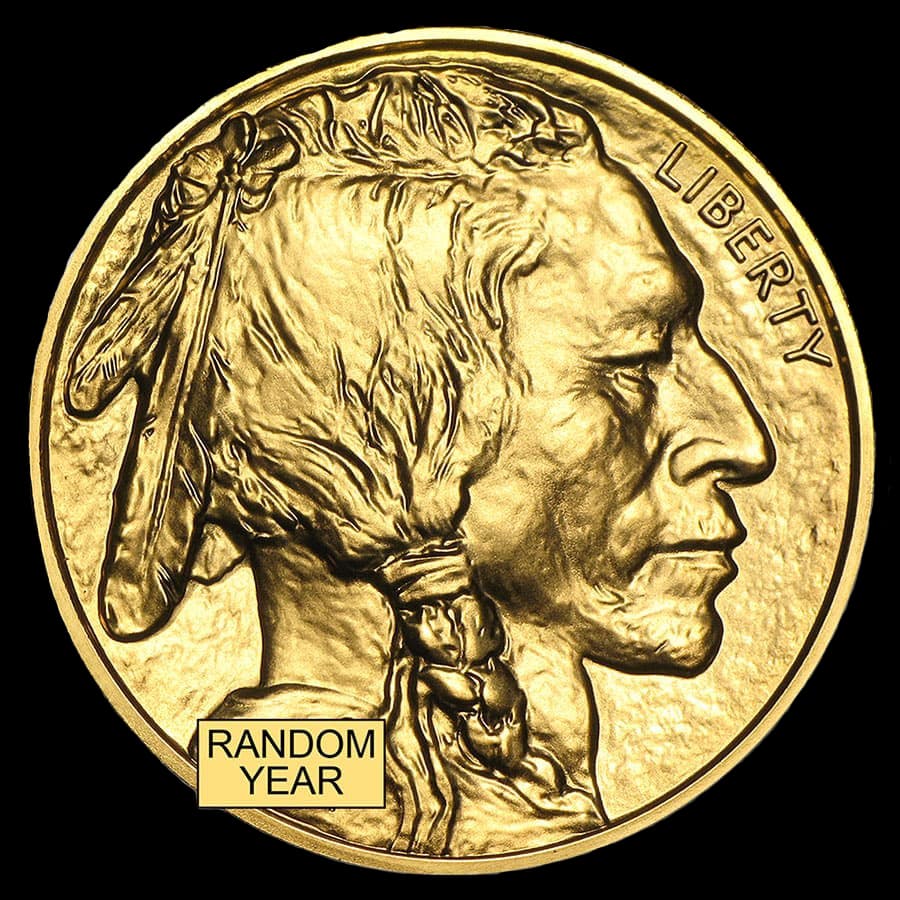
A left-facing Native American portrait wearing a feathered headdress, recessed below the field. LIBERTY and thirteen stars surround the portrait, with the date below.
Reverse
An eagle perched on a bundle of arrows, holding an olive branch, surrounded by UNITED STATES OF AMERICA, IN GOD WE TRUST, E PLURIBUS UNUM, and FIVE DOLLARS. The raised branch-mint letter, when present, sits to the left of the arrow bundle.
The coin measures about 21.6mm in diameter and weighs about 8.359 grams total, with a reeded edge. Correct weight alone does not prove authenticity, and correct gold content alone does not prove U.S. Mint origin — counterfeit examples of this series exist. A weak or unclear mintmark should be evaluated carefully rather than assumed to be missing or fake. Because of this, professional testing or certification is often necessary before relying on a coin's stated details for pricing.
Indian Head Half Eagle Mintmarks
The Indian Head Half Eagle's branch-mint mark is raised rather than incuse. When present, it appears on the reverse to the left of the fasces, or bundle of arrows.
Philadelphia
No mintmark. Produced issues throughout the main 1908–1916 run and struck the final 1929 issue. No mintmark does not automatically mean low value.
Denver
‘D’ mintmark, raised. Produced multiple dates during the 1908–1916 period. Date, grade, and condition vary in scarcity across Denver issues.
San Francisco
‘S’ mintmark, raised. Produced issues during the 1908–1916 period. Mintmarks may be weak or difficult to read on some examples — a faint ‘S’ does not mean the coin is counterfeit or lacks a mintmark. Some dates and high grades are significantly scarcer than others.
New Orleans
‘O’ mintmark, raised. Appears only on the 1909-O — the only New Orleans issue in the series. A purported 1909-O deserves careful authentication, and not every coin offered as a 1909-O is genuine.
Indian Head Half Eagle Issue Years
Production ran annually from 1908 through 1916, with no issues from 1917 through 1928, before a single final Philadelphia issue in 1929.
| Year | Philadelphia | Denver | New Orleans | San Francisco | Notes |
|---|---|---|---|---|---|
| 1908 | Yes | Yes | — | Yes | First year of issue |
| 1909 | Yes | Yes | Yes (1909-O) | Yes | Only New Orleans issue in the series |
| 1910 | Yes | Yes | — | Yes | |
| 1911 | Yes | Yes | — | Yes | |
| 1912 | Yes | — | — | Yes | The 1912-S frequently has a weak or indistinct mintmark |
| 1913 | Yes | — | — | Yes | |
| 1914 | Yes | Yes | — | Yes | |
| 1915 | Yes | — | — | Yes | |
| 1916 | — | — | — | Yes | Final year of the main run |
| 1917–1928 | — | — | — | — | No Indian Head Half Eagles struck |
| 1929 | Yes | — | — | — | Final issue of the series; large mintage, low survival |
Common Dates, Better Dates, and Key Issues
Not every Indian Head Half Eagle should be priced the same way. Some Philadelphia and Denver issues are encountered more frequently, while San Francisco issues can be substantially scarcer in higher grades, and strike quality and mintmark clarity vary by issue. Original mintage alone does not determine current rarity — surviving population, grade, condition, certification, and market demand matter just as much. A common date in an exceptional grade can carry meaningful numismatic value, and cleaning or surface problems can sharply reduce that value regardless of date. Rare-date and mintmark claims should always be verified through authentication rather than assumed.
The two most widely recognized key dates in the series are the 1909-O, the only New Orleans issue, and the 1929, the final year. Both deserve individual attention rather than a bullion-only quote — but not every San Francisco or Denver coin should be assumed rare simply because it carries a mintmark.
The 1909-O Indian Head Half Eagle
The 1909-O is the only New Orleans issue of the Indian Head Half Eagle series and carries an ‘O’ mintmark on the reverse, to the left of the arrows. It had a relatively small original mintage and is a widely recognized key date within the series.
Condition, originality, grade, and certification still matter for a specific coin's value — being a 1909-O does not override the need to evaluate the individual coin. Counterfeit examples and altered mintmarks are a serious concern with this date, so a raw purported 1909-O should not receive a rarity premium until it has been authenticated. Certification from PCGS or NGC may improve market confidence, but the certification number and physical holder should still be verified.
The 1929 Indian Head Half Eagle
The 1929 was the final issue of the Indian Head Half Eagle series, produced at Philadelphia and carrying no mintmark — that absence is correct for this date and does not make the coin incomplete. The original mintage was substantial, but relatively few coins were ever released into normal circulation, and a significant portion were later melted rather than distributed.
As a result, the number believed to survive today is far smaller than the original mintage figure suggests, and the 1929 is a widely recognized key date. Authentication and certification are particularly important for this issue, and it should not be priced using a bullion-only formula.
Raw vs. Graded Indian Head Half Eagles
PCGS and NGC are third-party grading services that authenticate a coin and assign a numeric grade reflecting its condition. A certified holder provides an independent opinion on authenticity and grade, but a holder does not automatically make a coin rare — grade materially affects collector demand, particularly for scarcer dates like the 1909-O and 1929.
Certification numbers should be verified against the grading service's public records, and cracked, damaged, or tampered holders require careful inspection before relying on the labeled grade. Raw, uncertified coins can still be purchased after authentication — that authentication is completed during the in-person evaluation before a transaction is finalized. Gold Silver Crypto evaluates the actual coin and current market conditions, not merely the holder label it arrives in.
Indian Head vs. Liberty Head Half Eagle
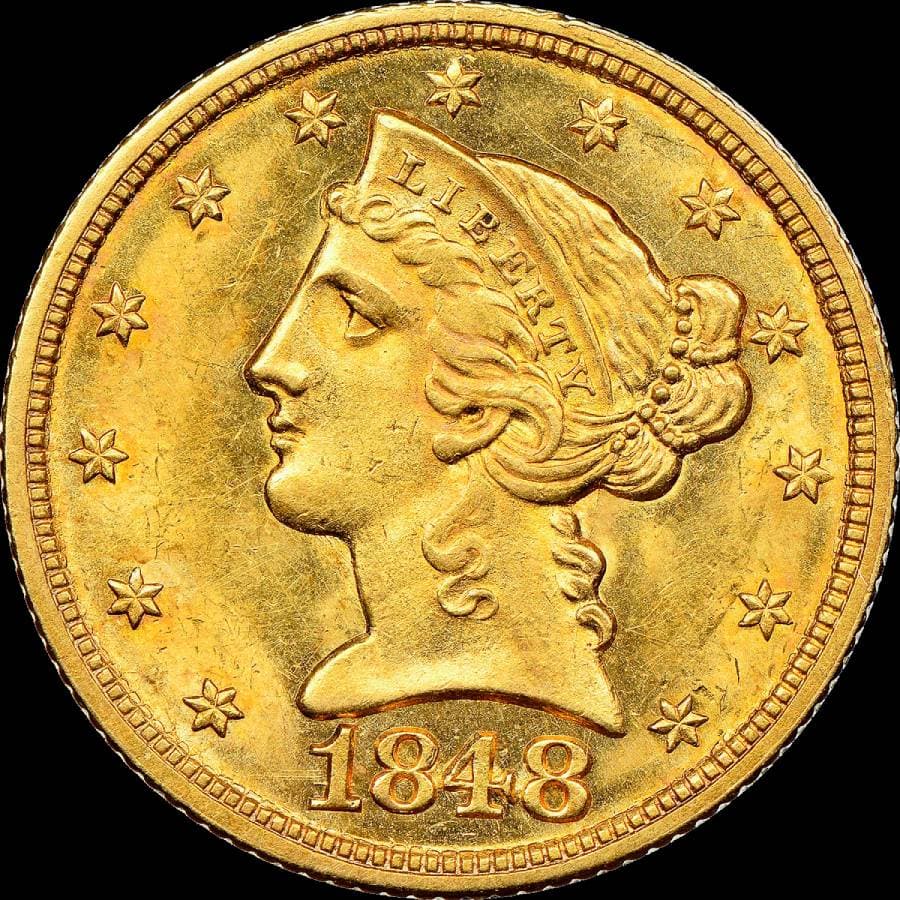
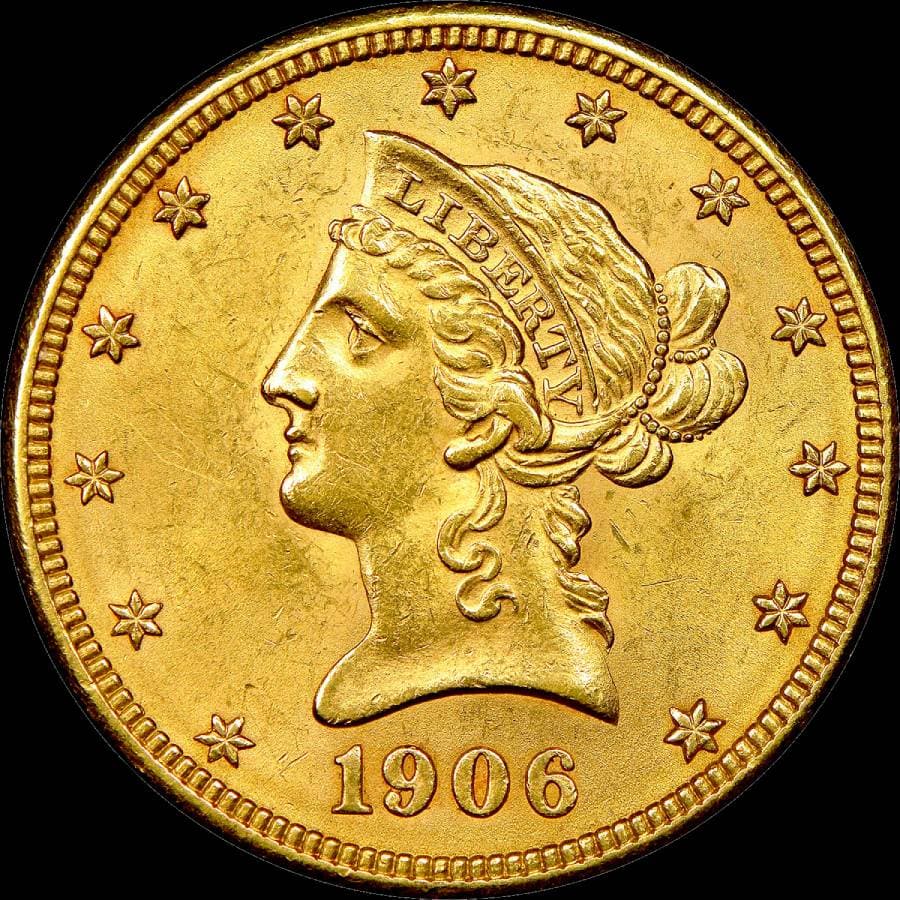
The Liberty Head $5 Half Eagle was the coin the Indian Head design replaced. Both are historical $5 coins with the same approximate gold content, but the designs and production histories are very different.
| Feature | Indian Head Half Eagle | Liberty Head Half Eagle |
|---|---|---|
| Designer | Bela Lyon Pratt | Christian Gobrecht |
| Issue years | 1908–1916 and 1929 | 1839–1908 |
| Production pattern | Interrupted; 12-year gap before final issue | Continuous annual production |
| Obverse design | Native American portrait | Coronet Liberty portrait |
| Reverse design | Eagle perched on arrows | Eagle with shield |
| Relief | Incuse (recessed) principal design | Conventional raised design |
| Purity | 90% gold (.900 fine) | 90% gold (.900 fine) |
| Actual gold content | Approximately 0.24187 oz | Approximately 0.24187 oz |
| Total weight | Approximately 8.359 g | Approximately 8.359 g |
| Diameter | Approximately 21.6 mm | Approximately 21.6–21.65 mm (most issues) |
| Face value | $5 legal tender | $5 legal tender |
| Mints | Philadelphia, Denver, New Orleans, San Francisco | Philadelphia, Charlotte, Dahlonega, New Orleans, San Francisco, Carson City, Denver |
| Major value factors | Date, mintmark, grade, authenticity | Date, mintmark, type, grade, authenticity |
| Potential numismatic value | Yes, depending on date, mintmark, grade | Yes, depending on date, mintmark, type, grade |
They are different series and should not be priced interchangeably.
Indian Head Half Eagle vs. Indian Head Quarter Eagle
Both denominations use related Bela Lyon Pratt incuse designs, but they should not be confused merely because the artwork looks similar — they are different coins with different gold content.
| Feature | Half Eagle ($5) | Quarter Eagle ($2.50) |
|---|---|---|
| Face value | $5 | $2.50 |
| Actual gold content | Approximately 0.24187 oz | Approximately 0.12094 oz |
| Total weight | Approximately 8.359 g | Approximately 4.18 g |
| Diameter | Approximately 21.6 mm | Approximately 18 mm |
| Issue years | 1908–1916 and 1929 | 1908–1915 and 1925–1929 |
| Designer | Bela Lyon Pratt | Bela Lyon Pratt |
| Design style | Incuse | Incuse |
| Mints | Philadelphia, Denver, New Orleans, San Francisco | Philadelphia and Denver |
| Primary market | Historical / numismatic and bullion | Historical / numismatic and bullion |
| Potential numismatic value | Yes, depending on date, mintmark, grade | Yes, depending on date, mintmark, grade |
The Half Eagle contains roughly twice the gold content of the Quarter Eagle. Similar artwork does not mean equal value.
Indian Head Half Eagle vs. Modern $5 Gold Eagle
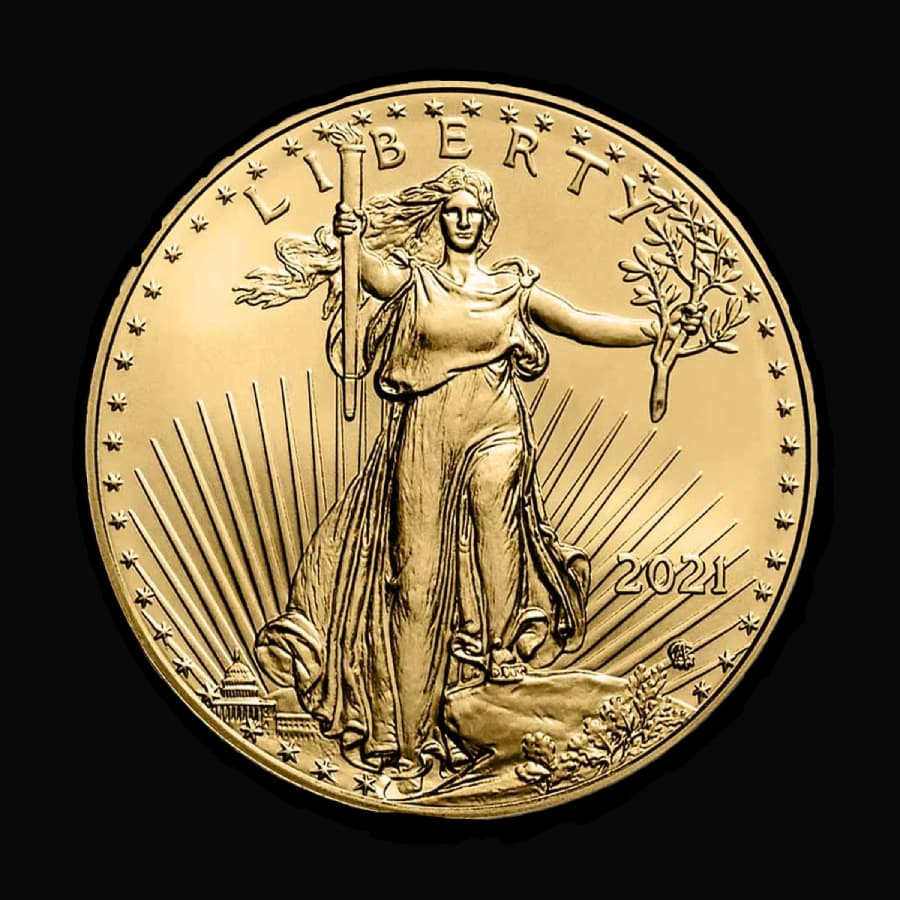
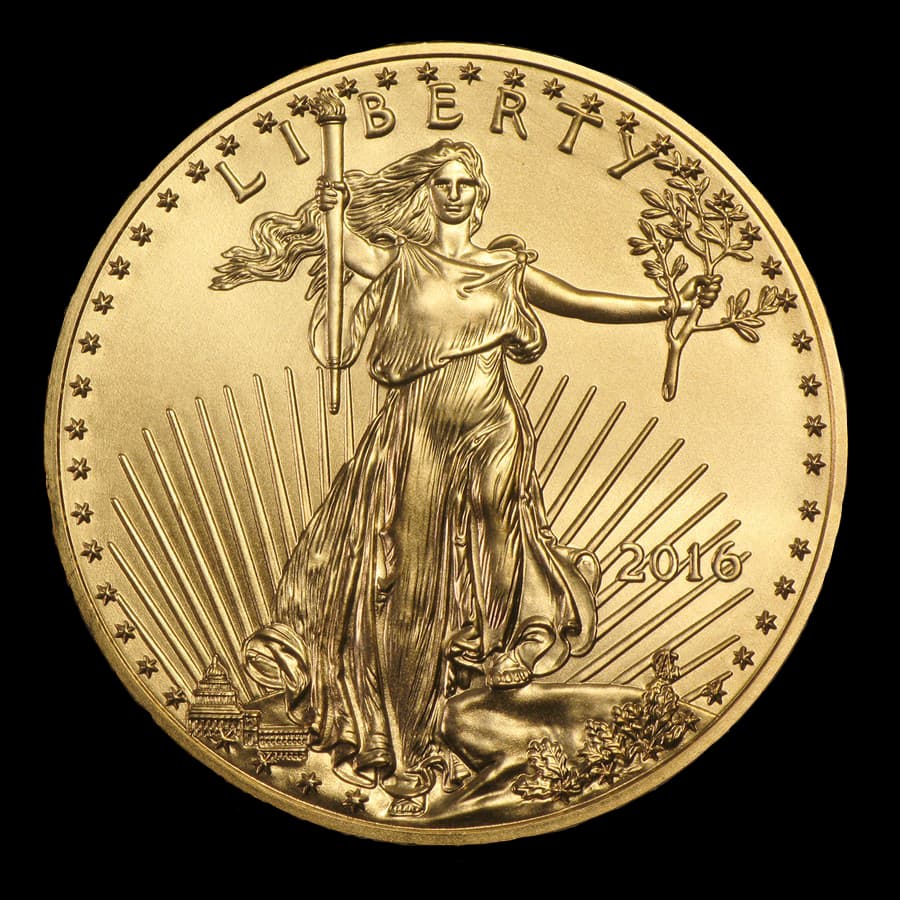
Both coins carry a $5 face value, but that shared denomination does not mean equal gold content. The American Gold Eagle 1/10 oz size is a modern bullion coin.
| Feature | Indian Head $5 Half Eagle | Modern $5 American Gold Eagle |
|---|---|---|
| Coin type | Historical pre-1933 gold coin | Modern bullion coin |
| Issue years | 1908–1916 and 1929 | 1986–present |
| Face value | $5 | $5 |
| Purity | .900 fine | .9167 fine |
| Actual gold content | Approximately 0.24187 oz | 0.100 oz |
| Total weight | Approximately 8.359 g | Approximately 3.393 g |
| Design | Incuse Native American portrait and eagle | Saint-Gaudens Liberty and modern eagle reverse |
| Main value factors | Gold content plus possible numismatic value | Gold content plus bullion premium |
The Indian Head Half Eagle contains substantially more gold than a 1/10 oz Gold Eagle. “Half Eagle” does not mean half-ounce, and face value is not the modern market value for either coin.
Our Take
Common-date Indian Head Half Eagles combine recognizable gold content with a genuinely distinctive design. The recessed portrait and eagle give the series legitimate collector interest beyond its melt value, and that combination makes it appealing to buyers who want more than a plain bullion coin.
They are not automatically the cheapest way to purchase gold. A buyer focused only on ounces may find modern bullion coins or gold bars more efficient. Sellers should not accept a quote based on one-tenth ounce or half an ounce — the coin contains neither. Date, mintmark, grade, surface quality, and authenticity all need to be checked, and the 1909-O and 1929 in particular should never be treated like ordinary bullion coins. Age alone does not make every example rare.
Frequently Asked Questions
Add it to your cart and check out securely online with live, spot-based pricing, or call or text (385) 442-9636 if you would rather order by phone. Orders ship fully insured, and free local pickup is available.
Utah exempts investment-grade precious metals from sales tax, so no sales tax is added to bullion orders like this one. Tax treatment in other states varies, and any applicable tax is calculated at checkout.
An Indian Head Half Eagle contains approximately 0.24187 troy ounce of actual pure gold. The coin is struck in a 90% gold, 10% copper alloy, so its total weight (about 8.359 grams) is higher than its actual gold content.
The design was issued annually from 1908 through 1916. Production then stopped for twelve years before one final Philadelphia issue in 1929, when the denomination was discontinued. The series was not produced continuously from 1908 through 1929 — there is a significant gap in the middle.
Incuse means the main design — the portrait, the eagle, the lettering, and the stars — is recessed below the coin's field rather than raised above it. The field is the coin's flat, highest surface. This was an unusual design choice for U.S. circulating coinage, inspired by ancient Egyptian relief carving. Incuse does not mean the coin is damaged, weakly struck, hand-engraved, or counterfeit — it is the intended design.
The mintmark is raised, even though the rest of the design is incuse. This is an important exception: while Liberty's portrait, the eagle, and the lettering are all recessed below the field, the branch-mint letter stands up above the surface, on the reverse to the left of the bundle of arrows.
On the reverse, to the left of the bundle of arrows the eagle is perched on. Philadelphia coins have no mintmark. Some mintmarks, particularly on certain San Francisco issues, can be weak or difficult to read — a faint mintmark does not necessarily mean a coin lacks one or is counterfeit.
The 1909-O is the only New Orleans issue of the Indian Head Half Eagle series and had a relatively small original mintage. It is a recognized key date, but condition, originality, grade, and certification all still matter for a specific coin's value. Counterfeit examples and altered mintmarks are a real concern with this date, so any purported 1909-O deserves careful authentication before a rarity premium is assigned.
The 1929 was the final issue of the series, struck at Philadelphia. Its original mintage was substantial, but relatively few coins were released into circulation before the design was discontinued, and many were later melted rather than distributed. The number believed to survive today is far smaller than the original mintage would suggest. It is a recognized key date, and authentication and certification are particularly important for this issue.
The Liberty Head Half Eagle, issued from 1839 to 1908, uses a conventional raised-relief coronet Liberty design. The Indian Head Half Eagle, which replaced it starting in 1908, uses Bela Lyon Pratt's incuse design, where the main devices are recessed below the coin's surface. Both contain approximately the same amount of gold, but they are different series with very different designs and production histories.
The Indian Head Half Eagle is a historical U.S. coin containing approximately 0.24187 troy ounce of gold. The modern $5 American Gold Eagle is a 1/10 oz bullion coin first issued in 1986, containing exactly 0.100 troy ounce of gold. Despite sharing the same $5 face value, the Half Eagle contains substantially more gold — face value is not the modern market value for either coin.
No. Cleaning can permanently reduce a coin's numismatic value, and this is especially true for incuse coins, where dirt or residue can settle into the recessed design areas. Attempting to clean those recessed areas can damage the surfaces and affect grading. Bring the coin in as-is or text photos before doing anything to it.
Yes. Text clear photos of the obverse and reverse, the date, the mintmark area to the left of the arrows, and any certification label to (385) 442-9636. Photos can help with a preliminary discussion, but final authentication and pricing require an in-person evaluation of the actual coin.
Related Gold Products
Ready to buy an Indian Head Half Eagle?
Add it to your cart for live, spot-based pricing and secure checkout, or call or text if you would rather order by phone. Photographs can help with a preliminary discussion, but final authentication and pricing require an in-person evaluation.
About This Page
Editorial note: Indian Head Half Eagle values depend on gold spot price, date, mintmark, condition, certification, and collector demand. This page is intended as an identification and buying/selling guide, not a price list, appraisal, or financial advice. Specifications were verified against United States Mint historical data, PCGS CoinFacts, and NGC numismatic references.
Last updated: July 2026