Mexico Gold 50 Pesos (Random) AU-BU
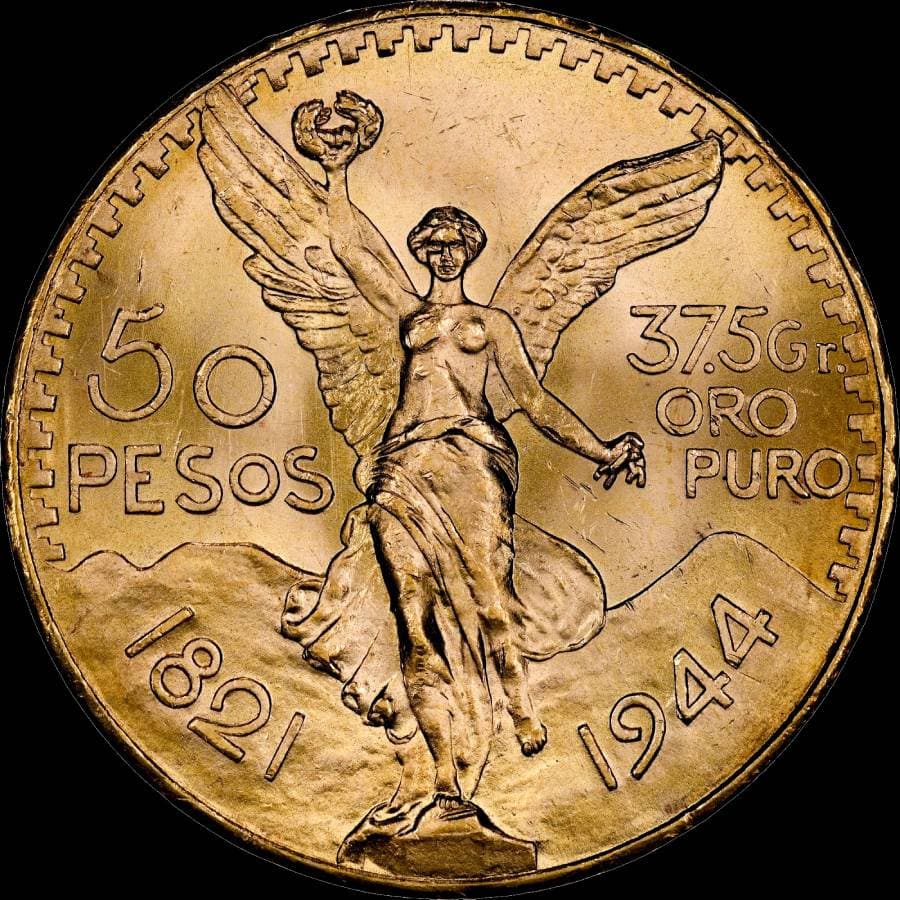
Images are for educational/reference use and may not represent current inventory.
Gold Silver Crypto sells Mexican 50 Peso Centenario gold coins, with live spot-based pricing and secure checkout. Pricing depends on live gold value, date, whether the coin is an original issue or later restrike, condition, authenticity, certification, and current market demand.
Related Products
Mexican 50 Peso Centenario Specifications
| Metal | Gold |
| Purity | 90% gold / .900 fine |
| Pure gold content | 37.5 g |
| Actual gold weight | Approximately 1.20565 troy oz |
| Total weight | Approximately 41.6666 g |
| Diameter | Approximately 37 mm |
| Face value | 50 pesos |
| Country | Mexico |
| First issued | 1921 |
| Mint | Casa de Moneda de México |
| Edge | Lettered INDEPENDENCIA Y LIBERTAD |
| Obverse | Mexican National Shield |
| Reverse | Winged Victory with Iztaccíhuatl and Popocatépetl |
The Centenario contains more than one full troy ounce of pure gold. Total weight is higher than pure gold content because the coin is .900 fine gold, not pure gold. The 50-peso denomination is not the coin's modern market value. Date, strike period, condition, authenticity, certification, and market demand may affect premium — and many coins dated 1947 were struck later as official restrikes. Learn about 1947 Centenarios.
About the Mexican 50 Peso Centenario
The Centenario — named for the first centennial of Mexican independence — was first issued in 1921 by Casa de Moneda de México. Production was suspended after 1931 and resumed in 1943 because of demand for gold coins. Standard dated production continued through 1947, and the Mexican Mint later struck official restrikes using 1947 dies for decades afterward to meet ongoing demand.
Unlike a modern bullion program such as the American Gold Eagle or Gold Maple Leaf, the Centenario was originally a circulating gold coin tied to Mexico's independence centennial before becoming a recognized bullion-linked product and world coin. It is widely recognized internationally because of its substantial gold content and long production history, and it is bought and sold both for its gold value and, on certain dates, its numismatic interest.
How to Identify a Mexican Centenario
Obverse
The obverse shows the Mexican National Shield, featuring the eagle and serpent, with the country name inscribed around the border. Coin details and lettering vary slightly by production period.
Reverse
The reverse shows Winged Victory holding a laurel wreath and broken chains, with the volcanoes Iztaccíhuatl and Popocatépetl in the background. The commemorative year 1821 and the coin's dated year both appear on the reverse, along with the 50-peso denomination on the standard design.
The coin measures approximately 37 mm in diameter and weighs approximately 41.6666 grams total. Its edge is lettered INDEPENDENCIA Y LIBERTAD, meaning “Independence and Freedom.” Correct weight alone does not prove authenticity — plated replicas and counterfeit pieces exist, and some listings misrepresent a coin's date or strike period. Because of this, visual inspection and professional testing or certification are important before relying on a coin's stated details for pricing.
Original Centenarios and Later Restrikes
Original Centenario production began in 1921 and was suspended after 1931. Production resumed in 1943, and standard dated issues continued through 1947. After 1947, the Mexican Mint produced official restrikes using the original 1947 dies, and millions of official restrikes were produced in later periods, many carrying the 1947 date.
Because of this, the visible 1947 date does not always represent the physical year a specific coin was manufactured — a coin dated 1947 could have been struck years or even decades later. Official restrikes are genuine Mexican Mint products, not counterfeit coins, and a restrike can still be highly liquid and valuable because it contains the same stated gold content as any other Centenario.
Earlier original dates may carry collector premiums depending on scarcity, condition, grade, and demand, but date alone should not be used to promise a numismatic premium. A buyer or seller should not describe a coin as an original 1947 strike unless that attribution is actually supported.
1947 Mexican Centenario and Official Restrikes
Genuine original 1947-dated Centenarios were struck in 1947 as the final year of that production run. Later, the Mexican Mint continued striking coins from the same 1947 dies well into the following decades to meet demand — these later official restrikes carry the identical 1947 date.
Because the date alone does not identify the physical striking year, most sellers should focus first on authenticity and gold content rather than assuming a specific 1947 coin is an early strike. Certified attribution, condition, and current market demand can still matter for coins with a documented earlier strike history, but a 1947-dated restrike remains a genuine Mexican Mint gold coin regardless. Listings that call every 1947 Centenario “rare” are misleading — a large portion of the 1947-dated Centenarios encountered in today's market are official later restrikes.
The Special 1943 Mexican 50 Peso Issue
Production resumed in 1943 after the suspension that began in 1931. The 1943 issue has a design distinction from the standard 50-peso format: rather than the usual denomination wording, it is commonly identified by gold-content inscriptions appearing on both sides of the Winged Victory figure, in place of the standard denomination text.
The 1943 issue should not automatically be priced like an ordinary common 1947 restrike. Authentication, condition, grade, and current market demand still determine the final evaluation, and any claim about its scarcity should be verified rather than assumed.
Raw vs. Graded Centenarios
PCGS and NGC are third-party grading services that authenticate a coin and assign a numeric grade reflecting its condition. A certified holder provides an independent opinion on authenticity and grade, but a holder does not automatically make a coin rare — grading premiums are typically limited on common bullion-oriented 1947 restrikes, while certain original dates or exceptional grades may receive stronger collector demand.
Certification numbers should be verified against the grading service's public records, and damaged, cracked, or questionable-looking holders should be inspected carefully before relying on the labeled grade. Raw, uncertified coins can still be bought after authentication — that authentication is completed during the in-person evaluation before a transaction is finalized, and pricing reflects the coin's authenticity, condition, date, and current market.
Mexican Centenario vs. One-Ounce Gold Coins
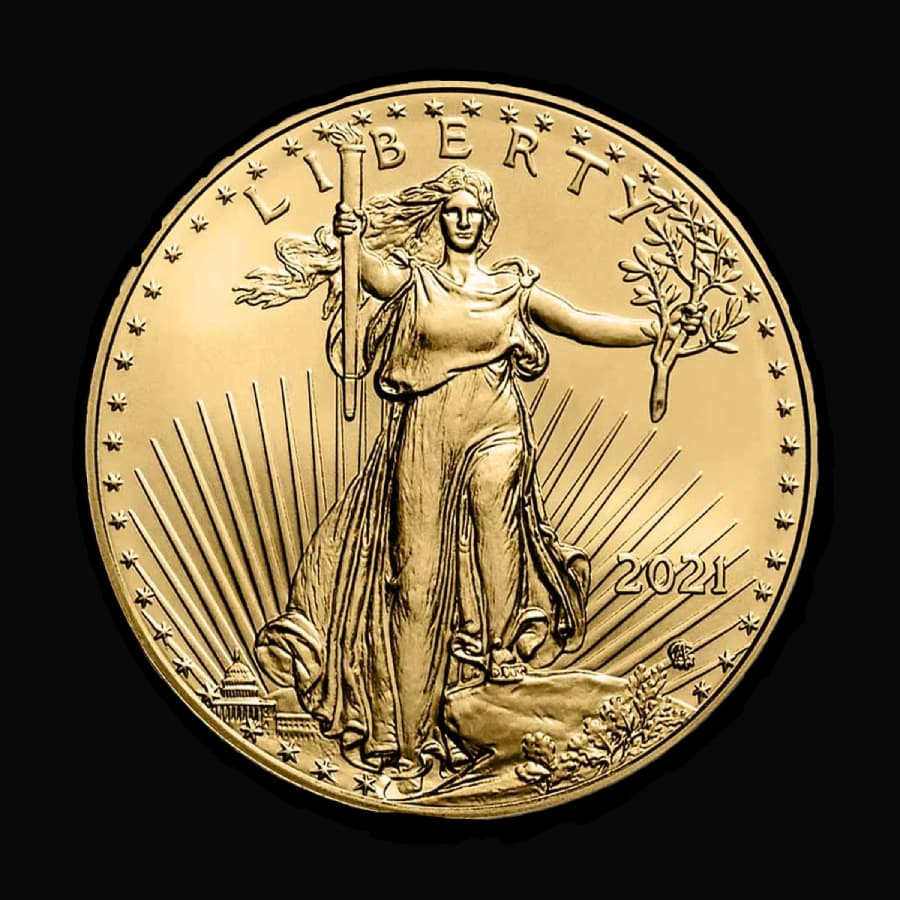
The Centenario contains more pure gold than a standard one-ounce bullion coin like the American Gold Eagle or Canadian Gold Maple Leaf. One Centenario does not equal one troy ounce of gold.
| Feature | Mexican 50 Peso Centenario | 1 oz American Gold Eagle | 1 oz Gold Maple Leaf |
|---|---|---|---|
| Country | Mexico | United States | Canada |
| First issued | 1921 | 1986 | 1979 |
| Purity | .900 fine | .9167 fine (22 karat) | .9999 fine (24 karat) |
| Actual gold content | Approximately 1.20565 oz | 1.000 oz | 1.000 oz |
| Total weight | Approximately 41.6666 g | 33.931 g | Approximately 31.1035 g |
| Face value | 50 pesos | $50 | $50 |
| Primary market | Bullion and world-coin collecting | Modern bullion | Modern bullion |
| Restrikes | Yes, many official restrikes dated 1947 | No equivalent regular restrike program | No equivalent regular restrike program |
The Centenario should not be compared on a one-coin-to-one-coin basis without adjusting for actual gold content. Premium, recognition, and resale demand differ by product and market.
Mexican Centenario vs. U.S. Double Eagles
The Centenario is also frequently compared to large historical U.S. gold coins like the Saint-Gaudens $20 Double Eagle and Liberty Head $20 Double Eagle. All three are large historical gold coins, but they do not contain the same amount of gold.
| Feature | Mexican 50 Peso Centenario | U.S. Double Eagle |
|---|---|---|
| Country | Mexico | United States |
| Issue era | 1921–1947 (plus later official restrikes) | 1850–1933 |
| Purity | .900 fine | .900 fine |
| Actual gold content | Approximately 1.20565 oz | Approximately 0.9675 oz |
| Total weight | Approximately 41.6666 g | Approximately 33.436 g |
| Face value | 50 pesos | $20 |
| Bullion vs. numismatic behavior | Common restrikes trade close to bullion; original dates vary | Common dates trade close to bullion; scarce dates vary |
| Restrike history | Extensive official restrikes dated 1947 | No equivalent restrike program |
| U.S. recognition | Well recognized as a large foreign gold coin | High, as a historical U.S. coin |
The Centenario contains noticeably more gold per coin than either U.S. Double Eagle. Date, condition, grade, rarity, and demand affect premiums differently across all three coins.
Our Take
Centenarios are recognizable and substantial gold coins. Their large gold content — more than 1.2 troy ounces per coin — can make them efficient for buyers who want more than one ounce of gold in a single piece rather than buying multiple smaller coins.
Common 1947-dated restrikes are generally more bullion-oriented than genuinely scarce original dates like certain 1921–1931 or 1943 issues. Buyers must account for the full 1.20565 oz of gold content when comparing price and premium against other gold products, and Centenarios are not automatically the cheapest gold product in every market.
Sellers should not accept a quote based on one ounce of gold, since the coin contains more than that, and should not assume an earlier date automatically guarantees a large collector premium. Authentication matters because counterfeits and replicas of this coin exist.
Frequently Asked Questions
Add it to your cart and check out securely online with live, spot-based pricing, or call or text (385) 442-9636 if you would rather order by phone. Orders ship fully insured, and free local pickup is available.
Utah exempts investment-grade precious metals from sales tax, so no sales tax is added to bullion orders like this one. Tax treatment in other states varies, and any applicable tax is calculated at checkout.
A Centenario contains 37.5 grams of pure gold, approximately 1.20565 troy ounces. The coin is struck in .900 fine gold, so its total weight (about 41.6666 grams) is higher than its actual gold content.
Yes. A Centenario contains approximately 1.20565 troy ounces of pure gold — more than a full troy ounce. It should not be priced or compared as if it were a one-ounce coin like an American Gold Eagle or Canadian Gold Maple Leaf.
1947 was the last year the Mexican Mint used newly dated dies for the standard 50 Peso design. After that, the mint continued striking coins using 1947-dated dies for decades to meet demand. A coin bearing the 1947 date does not necessarily mean it was physically struck in 1947 — it may have been produced later using the same dies.
It might be. Many coins dated 1947 are official later restrikes produced after 1947 using the original dies, while some were struck in 1947 itself. The date alone does not establish which is which. Both are genuine Mexican Mint gold coins with the same stated gold content.
Yes. Official restrikes are legitimate coins produced by the Mexican Mint using the original 1947 dies, and they remain legal tender in Mexico. A restrike is not a counterfeit, a replica, or a privately made piece — it is a government-issued gold coin with the same gold content as any other Centenario.
The 1943 issue was the first Centenario produced after Mexico resumed 50 Peso gold coin production, and it has a distinctive design detail: rather than the normal 50 PESOS denomination wording, it carries the gold content inscription on both sides of the Winged Victory figure. It should not automatically be priced the same as a common 1947 restrike, since authentication, condition, and grade still need to be evaluated individually.
The standard Centenario carries a 50 peso legal-tender face value. That denomination is not the coin's modern market value — price is based on the coin's actual gold content plus the current market premium.
Sometimes, but not automatically. Original dates from the 1921–1931 and 1943–1947 production periods can carry collector premiums depending on scarcity, condition, grade, and demand, while common 1947-dated restrikes generally trade closer to bullion value. Every coin still needs to be evaluated individually rather than assumed based on date alone.
No. Cleaning or polishing a Centenario can permanently reduce its collector value, even though it does not remove gold content. Bring the coin in as-is or text photos before doing anything to it.
Often, for original dates or exceptional grades, because certification confirms authenticity and assigns a grade the market recognizes. Grading premiums are typically limited on common bullion-oriented 1947 restrikes. A certified holder does not automatically make a coin rare, and the certification number should still be verified.
Yes. Text clear photos of the obverse and reverse, the date shown on the coin, and any certification label to (385) 442-9636. Photos can help with a preliminary discussion, but final authentication and pricing require an in-person evaluation of the actual coin.
Related Gold Products
Ready to buy a Mexican Centenario?
Add it to your cart for live, spot-based pricing and secure checkout, or call or text if you would rather order by phone. Photographs can help with a preliminary discussion, but final authentication and pricing require an in-person evaluation.
About This Page
Editorial note: Mexican 50 Peso Centenario values depend on gold spot price, date, strike period, condition, certification, and collector demand. This page is intended as an identification and buying/selling guide, not a price list, appraisal, or financial advice. Specifications were verified against Banco de México and PCGS numismatic references.
Last updated: July 2026