10 oz Silver Bar - Secondary Market
Gold Silver Crypto sells 10 oz silver bars — any mint, any brand, generic or recognized. Pricing is based on live silver spot, brand, condition, packaging, quantity, and current market demand.
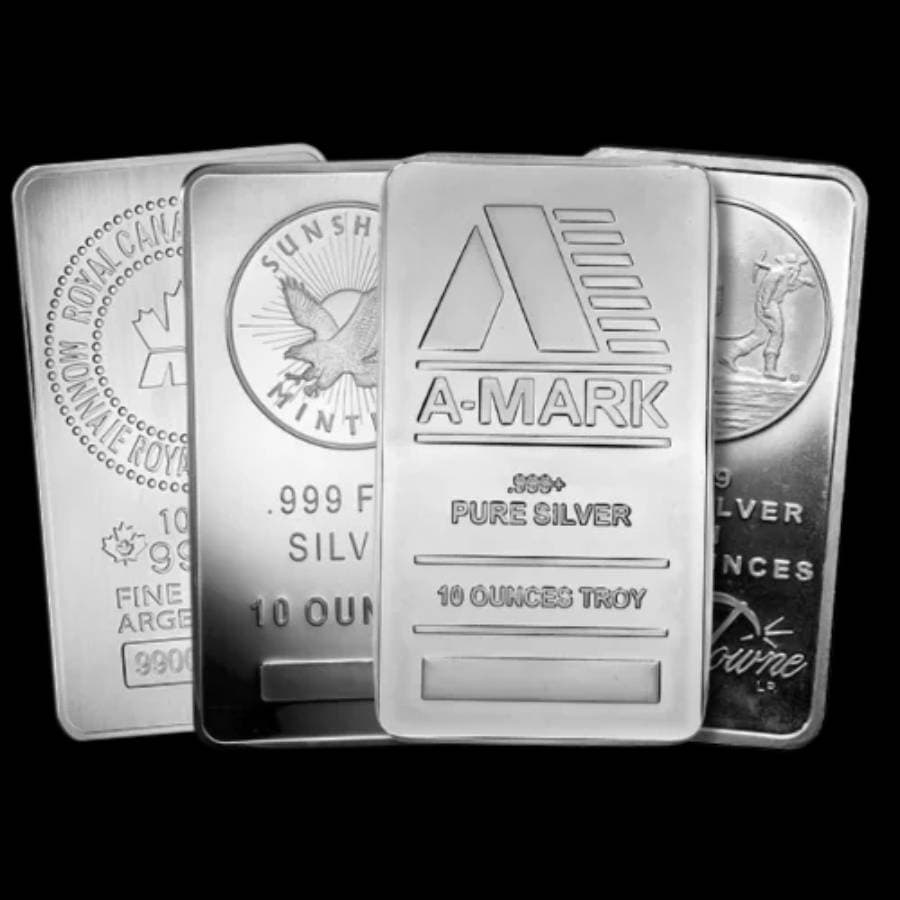
Images are for educational/reference use and may not represent current inventory.
Bar Specifications
| Metal | Silver |
| Weight | 10 troy oz (311.035 g) |
| Purity | .999 fine |
| Brand | Any mint or refiner — generic and recognized brands both accepted |
| Common formats | Cast or minted bar, loose or in original packaging |
| Face value | None (not legal tender) |
About 10 oz Silver Bars
A 10 oz silver bar contains ten troy ounces of .999 fine silver. Like all silver bars, it carries no face value or legal tender status — it is priced on silver content plus a market-based premium.
Not every 10 oz silver bar is the same product. Bars differ by manufacturer, purity, whether they are cast, poured, or minted, vintage or modern production, serial numbering, packaging, security features, condition, collector demand, and the buy and sell premium a specific bar commands. This page covers the 10 oz category generally. Where we have a detailed guide for a specific manufacturer or format, you will find it in the section below.
Why People Buy 10 oz Silver Bars
The 10 oz size is popular because it offers a meaningful amount of silver at a lower premium per ounce than 1 oz bars or coins, while still being manageable to store and handle compared to 100 oz bars. It is large enough to get a real discount on premium, but not so large that it is hard to sell in pieces over time.
Cast, Poured, and Minted Bars
10 oz silver bars are produced in different formats. Minted bars are struck from blanks with a consistent, polished finish and sharp design detail — most current-production branded bars are minted. Poured or cast bars are made by pouring molten silver into a mold, which gives each bar a rougher, more individual look and slightly variable dimensions, and are common among vintage refiner bars. Both formats are legitimate .999 fine silver; the format is a matter of production method and buyer preference, not a difference in silver content by itself.
Does Brand Matter?
Somewhat. Bars from well-known mints and refiners are widely recognized and hold their premium better than generic or unmarked bars. A bar from an unknown private mint may trade at or near melt value only, since dealers cannot verify its history as easily. Recognized brands are also easier to resell without additional testing, since their markings and weight standards are well established in the trade. That said, we buy any 10 oz silver bar — recognized or generic — based on its own weight, purity, and condition.
Vintage vs. Current-Production Bars
Some historic refiner brands are no longer producing silver bars, which makes vintage examples from those brands more sought after than current production. A clean vintage bar from a discontinued refiner can carry a premium above a generic bar of the same weight because of collector and dealer demand, independent of its silver content. Bars from currently active mints and refiners are still in production and typically trade closer to a standard market premium.
Generic vs. Premium Bars
A generic or unbranded 10 oz bar is priced mainly on silver content plus a modest premium. A premium bar — from a recognized brand, in original packaging, with serial numbering or security features, or from a discontinued vintage source — can command a stronger price. Neither type is inherently better; the right choice depends on whether your priority is the lowest cost per ounce or a bar with stronger resale recognition and collector interest.
Secondary-Market Bars
Many 10 oz silver bars we see come from the secondary market — bars bought years or decades ago that are now being resold rather than purchased new from a mint or refiner. Secondary-market bars should be inspected the same way as any other bar: for brand, condition, packaging, and authenticity. A secondary-market bar in good condition with original packaging is not automatically worth less than a new bar, and a new bar is not automatically worth more than a well-kept vintage one.
Our Take
The 10 oz bar is one of our most commonly traded silver products. Buyers like the size — it is large enough to get a meaningful discount on premium versus 1 oz bars, but not so large that it is hard to sell in pieces.
Brand matters here more than on 1 oz bars. A vintage bar from a discontinued refiner can trade at a noticeable premium over a generic bar of the same weight, and a recognized current-production brand is easier to move than an unmarked bar. If you are holding bars long-term, recognized brands tend to hold their spread better — but we buy generic and unbranded 10 oz bars too.
Condition also matters. Bars with heavy scratches or damage may not command the same premium as clean examples. Keep original packaging if you have it. If you want more flexibility when selling in smaller amounts, 1 oz silver bars or silver coins may suit you better.
10 oz Silver Bars vs Other Silver Products
10 oz bars often offer a lower premium per ounce than smaller silver bars or government coins, but liquidity and transaction size are the tradeoffs. The right choice depends on your goals.
| Product | Recognition | Typical Premium | Best For |
|---|---|---|---|
| 10 oz Silver Bar | High if known brand | Often lower per ounce | Larger low-premium silver position |
| 1 oz Silver Bar | Medium to high | Often lower than coins | Flexible bar ownership |
| American Silver Eagle | Very high in the U.S. | Usually higher | U.S. recognition and liquidity |
| Canadian Silver Maple Leaf | High globally | Often competitive | High-purity sovereign silver |
Premiums are relative and change with market conditions.
Frequently Asked Questions
Add it to your cart and check out securely online with live, spot-based pricing, or call or text (385) 442-9636 if you would rather order by phone. Orders ship fully insured, and free local pickup is available.
Often, yes, though the premium is usually modest compared to coins. Bars from recognized brands carry a premium above melt because of brand recognition and liquidity in the resale market. Generic or unbranded bars may trade closer to melt.
Usually, yes. Larger silver bars typically carry a lower premium per troy ounce than smaller bars, since the fixed cost of manufacturing is spread over more silver. A 10 oz bar will generally cost less per ounce than ten separate 1 oz bars from the same brand. The tradeoff is that a 10 oz bar is a larger single transaction.
Yes, to a degree. Bars from well-known mints and refiners are widely recognized and hold their premium better than generic bars. But any 10 oz bar contains the same 10 troy ounces of .999 fine silver regardless of who made it — brand mainly affects resale ease and premium, not the underlying silver content.
Yes. We buy 10 oz silver bars from any mint or refiner, including generic and lesser-known brands, not just well-known names. Every bar is evaluated on its own weight, purity, and condition.
Not usually, though a 10 oz bar represents a larger single transaction than a 1 oz piece. Recognized brand bars are easier to sell than generic or unmarked bars. If you want maximum flexibility to sell in smaller increments over time, 1 oz bars or silver coins may suit you better.
Some 10 oz silver bars may be eligible for a self-directed silver IRA if they meet IRS fineness requirements and are held through an approved custodian and depository. A bar must be produced by a national government mint or an accredited refiner and meet a minimum fineness of .999 to qualify. Not all bars qualify. Talk to your IRA custodian before purchasing for an IRA.
10 oz silver bar pricing is based on live silver spot, stated weight, purity, brand recognition, condition, and current market demand. Recognized brand bars, generic bars, loose bars, and bars with original packaging may all price differently. Quantity matters too — multiple bars may move differently than a single bar.
No. Cleaning or polishing a silver bar can create surface damage and does not add value. Bring the bar in as-is or text photos before doing anything to it.
Yes. Text photos of the front and back of your bar, any assay card or packaging, and the brand markings to (385) 442-9636. Include any serial numbers or hallmarks visible on the bar. The more detail you provide, the more accurate the estimate.
Utah exempts investment-grade precious metals from sales tax. A 10 oz silver bar purchased in Utah should not be subject to sales tax. Confirm with your dealer at the time of purchase.
Shop 10 oz Silver Bars by Brand
Related Silver Products
Ready to buy 10 oz silver bars?
Add it to your cart for live, spot-based pricing and secure checkout, or call or text if you would rather order by phone.