10 oz Silver Bar - Engelhard
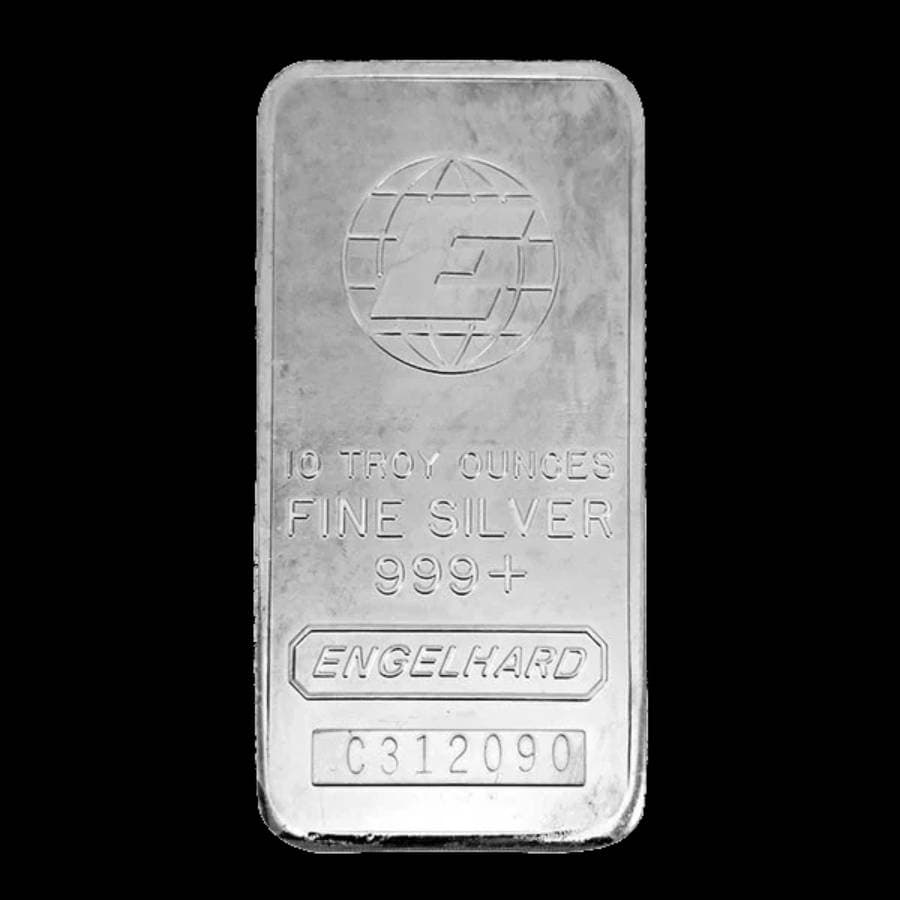
Images are for educational/reference use and may not represent current inventory.
Engelhard produced multiple 10 oz bar varieties. Logos, serial numbers, reverse designs, dimensions, and finishes may differ from the example shown.
Gold Silver Crypto sells 10 oz Engelhard Silver Bars, with live spot-based pricing and secure checkout. Pricing depends on live silver value, the exact Engelhard variety, manufacturing style, markings, condition, authenticity, and current collector and dealer demand.
Related Products
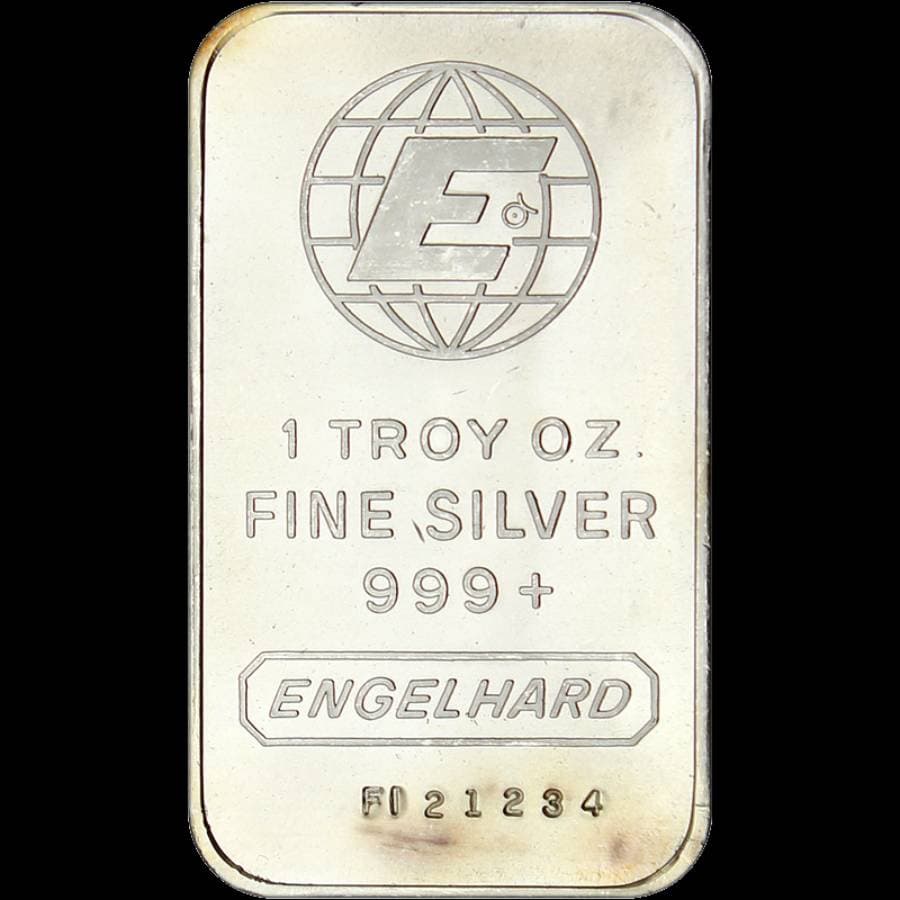
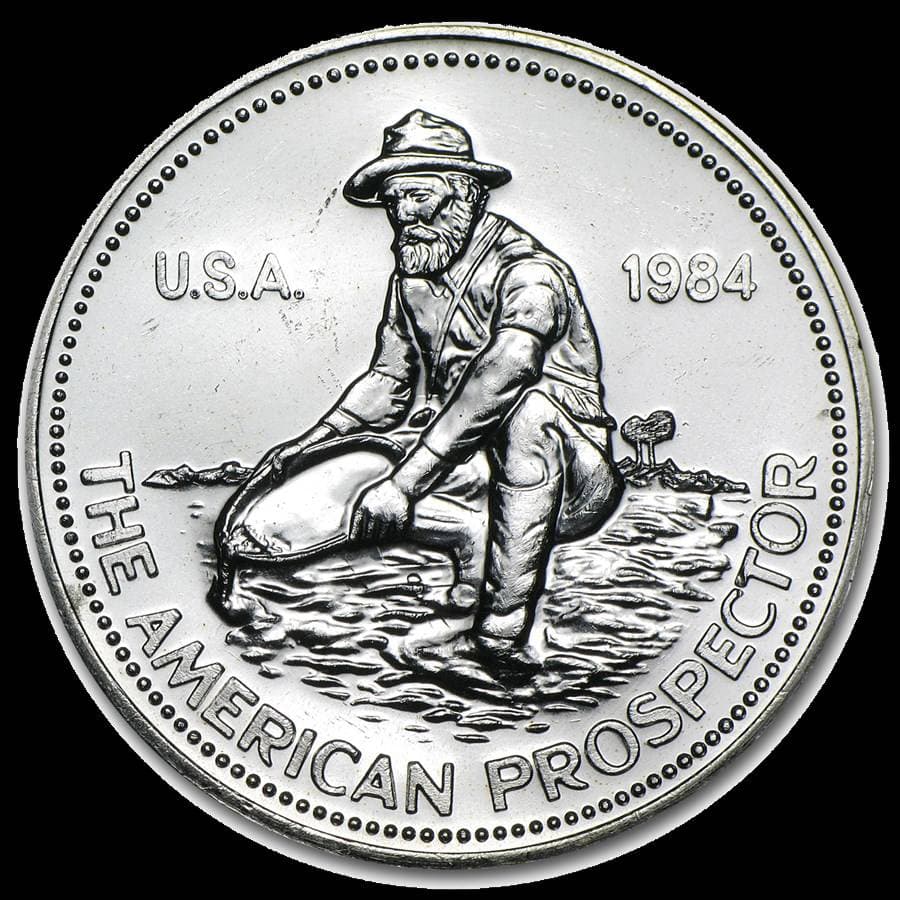
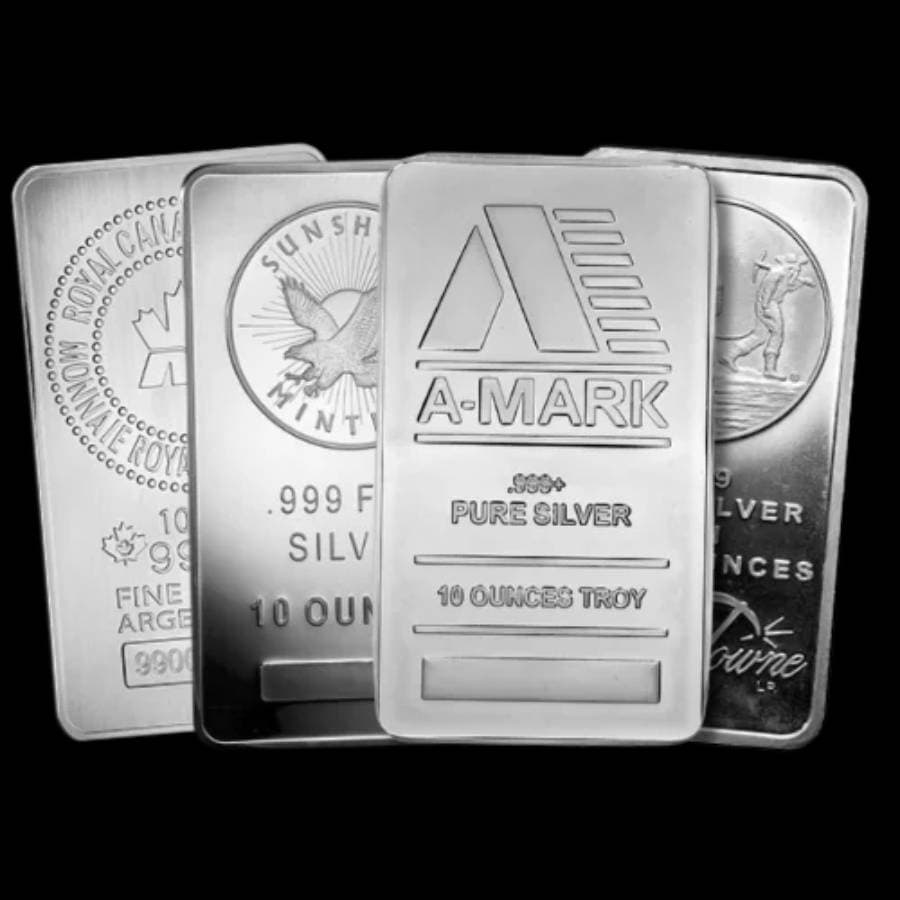
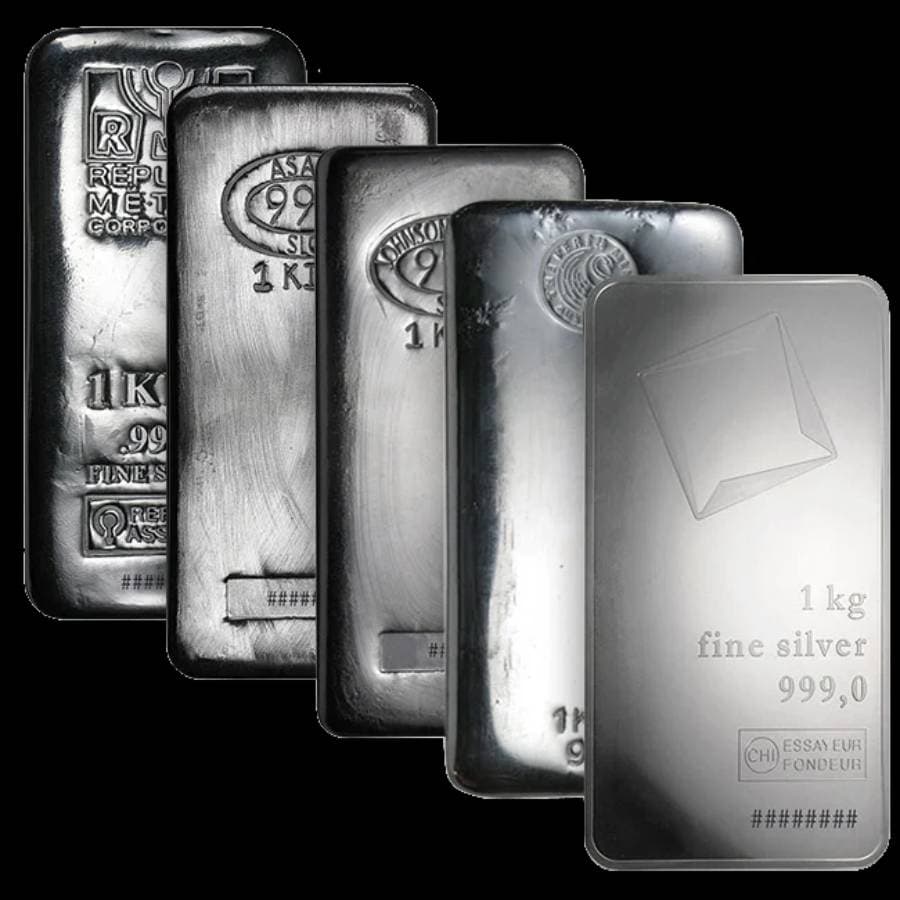
10 oz Engelhard Silver Bar Specifications
| Metal | Silver |
| Fine silver weight | 10 troy oz |
| Gram equivalent | Approximately 311.035 g |
| Common purity marking | .999 fine silver |
| Manufacturer | Engelhard |
| Product era | Discontinued / secondary market |
| Common formats | Pressed, minted, cast, or poured depending on variety |
| Serial number | Present on many examples; format varies |
| Reverse | Varies by product and production period |
| Face value | None |
| Primary value factors | Silver value, variety, format, condition, scarcity, and demand |
Exact dimensions vary by variety, so we do not publish one universal length, width, or thickness. Many examples are marked with the Engelhard name or logo, weight, purity, and a serial number, though reverse designs may be blank, feature a repeating Engelhard mark, or use another documented design. A serial number and correct weight do not by themselves prove authenticity.
About Engelhard Silver Bars
Engelhard Corporation grew out of a precious-metals refining and industrial materials business founded in the 19th century and became one of the most recognized names in American gold and silver refining through the 20th century, alongside its well-known Prospector-design bullion rounds and bars.
In the 1990s, Engelhard exited the precious-metals refining and bullion business, and that operation was eventually absorbed into BASF's holdings. Because Engelhard-branded bars are no longer newly produced, they are now encountered primarily through the secondary market.
Brand recognition drives real demand for these bars, but discontinued does not automatically mean rare. Some Engelhard 10 oz varieties are common, while others are scarcer — the exact variety, not the brand name alone, determines that.
How to Identify a 10 oz Engelhard Silver Bar
Many commonly encountered examples include some combination of the following front markings: the Engelhard name or winged logo, wording such as “Fine Silver” and a .999 purity mark, weight wording such as “10 Ounces Troy,” and a serial number.
The reverse varies by product and production period. Some examples feature a repeating pattern of the Engelhard logo, others have a blank back, and some use another documented Engelhard design. Fonts, logos, border styles, serial prefixes, finishes, shapes, and reverse patterns may all vary between legitimate varieties.
A difference from a single photograph you find online does not automatically make a bar counterfeit, and a matching photograph does not automatically make a bar genuine. Exact variety identification should rely on multiple documented characteristics together, not one detail in isolation.
Pressed vs. Poured Engelhard Bars
Pressed or Minted Engelhard Bars
Pressed or minted bars have a more uniform shape and finish, with machine-applied or struck markings. This is the commonly encountered classic rectangular format, and examples may have a repeating-logo reverse or a blank reverse, with serialization present on many examples. Packaging and condition still vary between individual bars.
Cast or Poured Engelhard Bars
Cast or poured bars have a less uniform surface and shape, reflecting the poured manufacturing process, with markings typically stamped rather than struck. Cooling lines, small dimples, or other natural pour irregularities are normal characteristics of this format, not damage. Some poured varieties may see stronger collector demand than common pressed examples, though this depends on the exact type, not the format alone.
Engelhard 10 oz Bar Varieties
Engelhard produced more than one 10 oz bar variety over the years, and no single description covers every example. Differentiating characteristics between varieties can include logo style, refinery or facility wording, serial-number prefix and length, front border and font style, weight and purity wording, pressed versus poured manufacture, reverse pattern, blank versus hallmarked reverse, bar dimensions, and packaging.
We do not publish an exhaustive variety catalog or assign rarity ratings without reliable documentation. When a specific bar appears to be a potentially scarce or unusual variety, detailed attribution against documented examples is the right next step rather than assuming rarity from appearance alone.
Are Engelhard Silver Bars Rare?
Engelhard bars are discontinued and widely collected, but discontinued does not automatically equal rare. Many 10 oz Engelhard bars, particularly common pressed examples, are commonly encountered today. Some poured bars, unusual-logo varieties, facility-specific markings, or lower-population types may be genuinely scarcer, and condition and original packaging can influence demand further.
Rarity has to be assigned to the exact variety being evaluated, not the Engelhard name by itself. Online sellers frequently overuse the word “rare,” and we do not assume every Engelhard bar carries a fixed collector premium.
Engelhard Bars vs. Generic 10 oz Silver Bars
Both may contain the same 10 troy ounces of silver, but brand recognition and collector interest can separate the two in the resale market.
| Feature | Engelhard Bar | Generic 10 oz Bar |
|---|---|---|
| Manufacturer recognition | High, discontinued refiner brand | Varies, often lower |
| Silver content | 10 troy oz | 10 troy oz |
| Typical purity | .999 fine (commonly marked) | Usually .999 fine |
| Current production status | Discontinued / secondary market | Often still in production |
| Variety interest | Multiple documented varieties | Typically one current design |
| Collector demand | Can be meaningful, depending on variety | Usually minimal |
| Packaging | Varies; original packaging sometimes present | Varies by current seller |
| Authentication considerations | Counterfeit and replica bars exist | Counterfeit bars exist industry-wide |
| Primary pricing factors | Silver value plus possible variety premium | Silver value plus modest premium |
A generic bar is not automatically fake or inferior. Buyers focused only on ounces may prefer lower-premium generic products, and the premium paid for an Engelhard bar may not be fully recovered when selling.
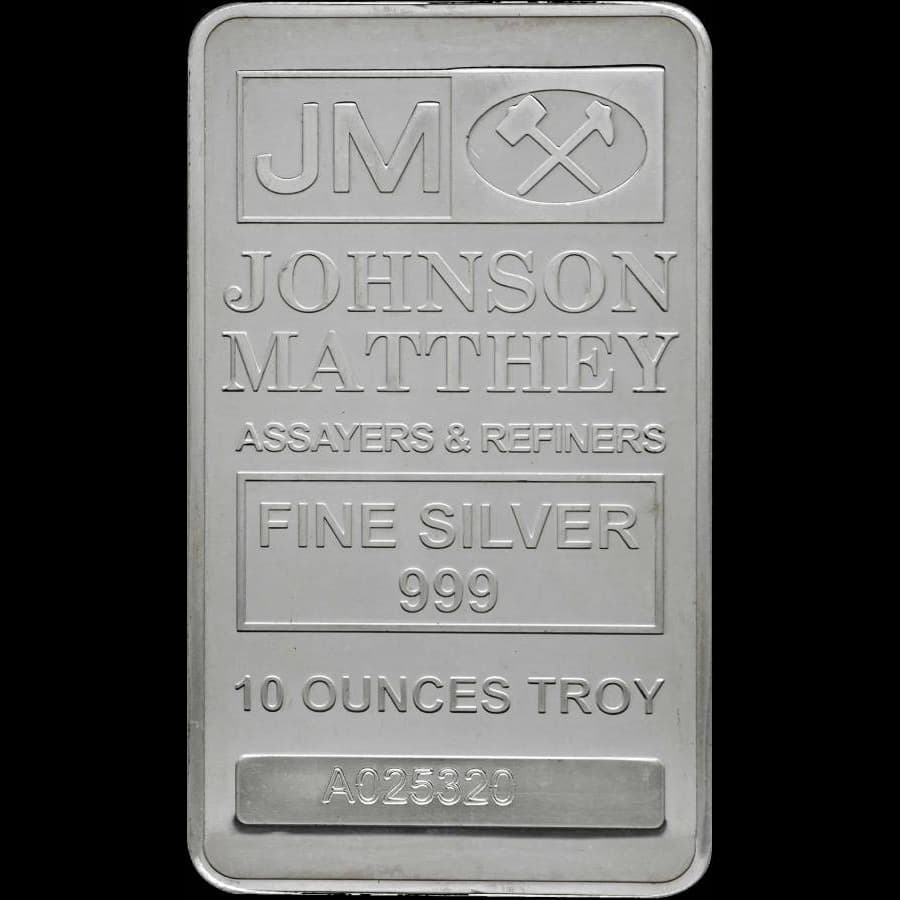
Engelhard vs. Johnson Matthey 10 oz Silver Bars
Both are well-recognized, discontinued refiner brands with strong secondary-market followings. Neither is automatically worth more than the other.
| Feature | Engelhard | Johnson Matthey |
|---|---|---|
| Historical refiner recognition | High | High |
| Pressed and poured formats | Both exist | Both exist |
| Variety depth | Multiple documented varieties | Multiple documented varieties |
| Hallmarks and serial numbers | Present on many examples; format varies | Present on many examples; format varies |
| Collector following | Strong | Strong |
| Secondary-market availability | Common for standard varieties | Common for standard varieties |
| Authentication concerns | Counterfeits and replicas exist | Counterfeits and replicas exist |
| Premium variability | Depends on exact variety and condition | Depends on exact variety and condition |
Both brands have collectible and bullion-oriented varieties. Exact variety, condition, scarcity, and current demand determine the premium — do not compare two bars using brand name alone.
Original Packaging and Condition
Some pressed Engelhard bars are encountered in plastic packaging, and packaging style can vary. Original plastic may be scratched, toned, cloudy, split, or partially opened after decades in storage — packaging alone does not prove authenticity, and we do not assume all packaging presented is factory-original without review.
Removing packaging may affect collector preference for some examples, so leave a bar in its original packaging if you have it. Do not clean or polish the bar. Surface marks generally do not change silver content but can affect collector value. Poured bars should not be judged against the same surface expectations as pressed bars, since cooling lines and mold irregularities are a normal part of that manufacturing process.
Testing and Authentication
Counterfeit and silver-plated imitations of vintage refiner brands, including Engelhard, are a documented concern in the bullion market. Our evaluation looks at weight verification, dimensional review, and visual examination, along with comparing hallmark and serial-number style against documented genuine examples. We also use precious-metal verification equipment, which can include XRF, conductivity testing, or density testing where appropriate.
No single check is relied on in isolation, and a bar cannot be fully authenticated from photographs alone — photographs can support a preliminary discussion, but a physical evaluation is required before it ships.
Our Take
Engelhard is one of the better-recognized historic names in silver bullion, and a common 10 oz Engelhard bar can combine straightforward silver exposure with added brand recognition. That said, the brand does not guarantee rarity, and buyers should understand what premium they are paying before it exceeds generic-bar pricing by much.
Sellers should not assume every Engelhard bar should be bought only at generic melt value, but the exact variety deserves review before assuming a collector premium applies. Authentication matters here because convincing replicas and plated imitations of vintage refiner bars do exist.
Customers focused only on accumulating ounces may prefer less expensive generic 10 oz bars. Collectors who specifically want Engelhard formats and varieties are the ones most likely to pay a meaningful premium for this brand.
Frequently Asked Questions
Add it to your cart and check out securely online with live, spot-based pricing, or call or text (385) 442-9636 if you would rather order by phone. Orders ship fully insured, and free local pickup is available.
Utah exempts investment-grade precious metals from sales tax, so no sales tax is added to bullion orders like this one. Tax treatment in other states varies, and any applicable tax is calculated at checkout.
A 10 oz Engelhard Silver Bar contains 10 troy ounces of silver, approximately 311.035 grams. Commonly encountered examples are marked .999 fine silver, though markings can vary slightly by variety.
No. Engelhard Corporation exited the precious-metals refining and bullion business in the 1990s after selling that division, which was eventually absorbed into BASF's operations. Engelhard-branded silver bars are no longer newly produced, which is why these bars are now found through the secondary market.
No. Engelhard produced several 10 oz bar varieties over the years. Depending on the specific variety, bars may be pressed or minted, or cast or poured. Logo style, serial-number format, reverse design, and dimensions can all vary between varieties, so one bar looking different from another does not automatically mean either one is fake.
Not automatically. Engelhard bars are discontinued and widely collected, but discontinued does not equal rare. Many pressed 10 oz examples are commonly encountered today. Some poured varieties, unusual hallmark styles, or specific production-facility markings may be scarcer, but rarity has to be assessed for the exact variety, not assumed from the brand name alone.
Many examples have a serial number, but not necessarily every variety, and the format and prefix style are not identical across all bars. A serial number can support an evaluation, but it does not by itself prove a bar is genuine.
It depends on the variety. Some examples have a reverse with a repeating pattern of the Engelhard “wings” logo. Others have a blank or differently styled reverse. Neither format alone confirms or rules out authenticity — the full bar needs to be evaluated.
Pressed or minted bars have a more uniform shape and finish, with machine-struck markings. Poured or cast bars are made by pouring molten silver into a mold, giving each bar a less uniform surface and shape, with stamped rather than struck markings. Both are legitimate manufacturing methods used across Engelhard's history, and natural pour characteristics like cooling lines are not damage.
Often, yes, because of brand recognition and collector demand for a discontinued name. But the premium paid when buying is not always fully recovered when selling, and a generic bar is not inferior or fake just because it lacks a recognized brand. The right choice depends on whether you prioritize the lowest cost per ounce or added brand and collector interest.
Not automatically. Both are well-recognized, discontinued refiner brands with strong secondary-market followings. Which one commands a stronger premium depends on the exact variety, condition, scarcity, and current demand — not the brand name by itself.
No. If your bar is in original packaging, leave it as-is. Original packaging can be part of what a buyer is evaluating, and removing it does not add value.
No. Cleaning or polishing a vintage silver bar can reduce its collector value, even though it does not remove silver content. Bring the bar in as-is or text photos before doing anything to it.
We verify weight, dimensions, and visual details, and compare hallmark and serial-number style against documented genuine examples. We also use precious-metal verification equipment, which can include XRF or conductivity testing where appropriate. No single check is relied on by itself — authentication is based on the full picture.
Yes. Text clear photos of the front and back, the serial number if visible, and any packaging to (385) 442-9636. Photos can help with a preliminary identification, but final authentication and pricing require an in-person evaluation of the actual bar.
Related Silver Products
Ready to buy a 10 oz Engelhard Silver Bar?
Add it to your cart for live, spot-based pricing and secure checkout, or call or text if you would rather order by phone. Photographs can assist with a preliminary identification, but final authentication and pricing require physical evaluation.